Cristian Romero Reveals Remarks by Referee John Brooks That Triggered Outrage as Legal Options Are Weighed
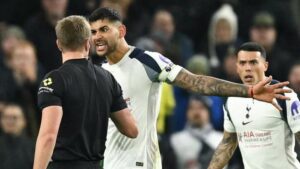
Spurs Fume After Controversial Liverpool Defeat
In the fallout from Tottenham Hotspur’s chaotic 2–1 defeat at home to Liverpool, club captain Cristian Romero has reportedly shared details of comments allegedly made to him by referee John Brooks during the match. Those remarks have intensified internal discussions at Spurs, with the club now said to be weighing up whether legal action could be pursued.
Below is a recap of the dramatic afternoon at the Tottenham Hotspur Stadium — witnessed by over 61,000 fans — and why the club believes its outrage is fully justified.
From Balanced Battle to Breakdown
The match started as a tight, competitive contest, but the turning point arrived in the 33rd minute. Xavi Simons was initially booked for a challenge on Virgil van Dijk, only for Brooks — following a VAR review — to change the decision to a straight red card for serious foul play. Spurs were suddenly down to ten men.
Despite the disadvantage, Tottenham held their own for a while. Liverpool eventually made their numerical edge count when substitute Alexander Isak finished off a flowing move to give the visitors the lead in the 56th minute.
Another controversial moment followed soon after. Hugo Ekitike outjumped Romero to head in Liverpool’s second goal, which VAR allowed to stand. Tottenham’s players and coaching staff were incensed, claiming Ekitike had clearly shoved Romero with both hands — an infringement they felt should have ruled the goal out.
Late in the match, matters worsened for Spurs. Romero was shown a second yellow card for lashing out at Ibrahima Konaté, reducing Tottenham to nine men. Still, the home side showed resilience. Richarlison scored in the 83rd minute, sparking a frantic push for an equaliser that ultimately came up short.
Post-Match Fallout: Fury and Serious Claims
After the final whistle, Tottenham head coach Thomas Frank strongly criticised the officiating. He labelled the decision to allow Ekitike’s goal a “major error” and questioned why neither Brooks nor VAR intervened.
Frank also argued that had the foul on Romero been recognised, the defender would not have been involved in the later incident that led to his dismissal — a chain of events that he believes unfairly shaped the end of the match.
Behind closed doors, tensions reportedly escalated further. Sources suggest Romero has since revealed what Brooks allegedly said to him during the disputed goal incident — comments that angered the Argentine and prompted Tottenham to explore possible legal routes. While no formal action has yet been taken, even considering such a step marks an unusually serious response.
More Than One Controversial Call
From Tottenham’s perspective, the frustration extends beyond a single decision. The club views the match as riddled with officiating mistakes, including:
A VAR-induced red card for Simons that many believe did not meet the criteria for serious foul play.
A second Liverpool goal that appeared to involve illegal use of the hands but was still validated.
The wider consequences of those calls, including suspensions and damage to team momentum, which Spurs argue could have been avoided.
Although overturning the result is highly unlikely, Tottenham could demand explanations, accountability, or even financial redress if procedures or professional standards are found to have been breached.
What Could Happen Next
If Spurs choose to escalate the matter, several outcomes may follow:
A detailed post-match review by refereeing authorities.
Internal investigations that could lead to disciplinary action.
Increased scrutiny of VAR and Premier League refereeing practices.
A strong public stance from Tottenham aimed at preventing repeat incidents.
A Bigger Issue for Football
This episode underlines the growing strain on trust in referees and VAR. When a club seriously considers legal action over officiating decisions, it highlights just how fragile confidence in the system has become.
VAR was designed to enhance accuracy and fairness. When controversial decisions stand despite reviews, it damages not only individual officials but the integrity of the competition itself.
For Tottenham fans, the frustration goes beyond the loss to a sense of injustice. For the wider football community, it serves as a warning: persistent officiating errors risk eroding faith in the game.
Final Reflection
Romero’s reported account of his interaction with John Brooks, combined with Tottenham’s openness to legal options, could make this incident one of the most talked-about controversies of the 2025–26 Premier League season. It may represent a shift in how clubs respond to contentious refereeing — through formal challenges, sustained pressure, and potentially legal channels.
Whether any resolution follows remains uncertain. What is clear, however, is that for Spurs, the anger and demand for accountability are not fading anytime soon.