White Hart Lane Uprising: The Night Spurs Fans Reached Breaking Point
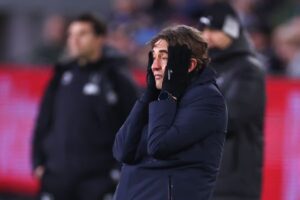
Tottenham’s latest disappointing display came amid rising tension, with travelling fans making their frustration with Thomas Frank impossible to ignore. From early in the first half, chants directed at the Spurs boss rang out, setting a hostile tone and deepening concerns about the club’s trajectory.
At first, the supporters’ mood was more sarcastic than angry. They ridiculed the slow pace and predictable sideways passing, briefly lifted when Micky van de Ven put Spurs ahead. But the optimism quickly faded. Despite having numbers behind the ball, Tottenham again looked fragile defensively. A heavy touch from Cristian Romero sparked a chain of errors that allowed Burnley back into the match, with Axel Tuanzebe left unmarked to score his first Premier League goal. Soon after, defensive uncertainty struck again as Lyle Foster forced home a second to complete Burnley’s comeback.
As Burnley took control, frustration among Spurs fans intensified. Calls for Frank’s dismissal grew louder, accompanied by chants predicting his exit. Some supporters turned to memories of better times, singing about former heroes like Dele Alli and Mauricio Pochettino — a stark reminder of how far belief and standards have fallen since the club last felt united behind its manager.
Even Romero’s dramatic late equaliser, which rescued a point, failed to ease the anger. The focus of the criticism remained on Frank rather than the players, many of whom were applauded at the final whistle. Romero symbolised that contrast: praised for his leadership and crucial goal, yet once again stepping up when the attackers failed to deliver. Frank continued applauding the supporters despite the hostility, but the bond between manager and fans now appears severely damaged.
On the pitch, the pattern was familiar.
Tottenham controlled possession, created opportunities and repeatedly tested Burnley’s goalkeeper. Spurs recorded 18 shots, 11 on target, forcing Martin Dúbravka into an outstanding performance that included nine saves. Burnley, in contrast, managed only four shots on target yet scored twice.
The issue was not creating chances, but converting them.
Dominic Solanke played an important role in the build-up but lacked composure in front of goal. Xavi Simons showed flashes of quality but struggled for consistency, while Wilson Odobert carried the ball forward with intent without posing a real threat in the box. Once again, Tottenham relied on defenders for goals, with Van de Ven and Romero among the club’s leading scorers this season.
After the match, Frank admitted his attackers must improve but insisted the overall performance deserved more. He highlighted better chance creation, effort and mentality, arguing Spurs had “done more than enough” to win. However, such explanations are losing credibility.
Tottenham have now won just twice in their last 14 league games, repeatedly dropping points against teams around them.
For many supporters, the deeper concern lies in recurring patterns. Second-half collapses have become common, raising doubts about tactical direction and in-game management. Substitutions and adjustments rarely change the momentum, and late goals often feel like individual moments rather than the result of a coherent plan.
The upcoming fixtures offer little relief. Matches against Manchester City, Manchester United, Newcastle and Arsenal are approaching, prompting serious questions about where positive results will come from. Frank is focused on the upcoming Champions League trip to Frankfurt, though uncertainty remains over whether he will still be in charge by then.
Tottenham’s leadership appears caught between patience and pressure. While the club is eager to avoid another cycle of managerial change, tangible progress is hard to identify. Aside from Van de Ven’s reliability and fitness, there is little evidence of real improvement under Frank. Injuries and squad limitations provide some context, but persistent defensive errors and a lack of goals are dragging Spurs toward danger.
Frank continues to preach hard work and belief, but those messages are no longer resonating with a fanbase worn down by performances that fail to deliver results. Unless Tottenham quickly rediscover their attacking edge, the outlook looks increasingly bleak. And as scrutiny of Frank intensifies, the question is no longer whether change is coming, but how long Spurs can afford to delay it.