Journalist outlines how FSG’s $1.8bn cash boost could trigger the next chapter
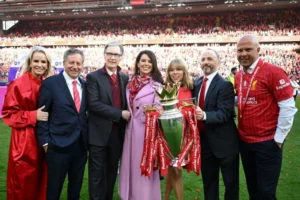
A significant ownership move away from Anfield could quietly influence what happens next for us.
Fenway Sports Group are poised for a major financial boost after agreeing in principle to sell the Pittsburgh Penguins, a development that sharpens attention on how our owners intend to use their resources. According to Chicago Business, FSG have struck a deal valuing the NHL franchise at between $1.7bn and $1.8bn, pending approval from the league’s Board of Governors.
That valuation marks a huge increase on the roughly $900m Fenway paid for a controlling stake in the Penguins in 2021. From a Liverpool perspective, this does not feel like a step back, but rather a calculated repositioning.
FSG’s portfolio already spans Liverpool, the Boston Red Sox, Fenway Park and Boston Common Golf, and this sale significantly boosts their liquidity. The report adds that the buyers, the Hoffmann Family of Companies, run a private-equity model with interests across several sectors, while FSG appear prepared to redeploy capital rather than let it sit idle.
This approach fits with what is already understood about the owners’ evolving strategy under football chief executive Michael Edwards. Fenway have reportedly completed due diligence on Getafe, with talks described as positive, underlining that a multi-club model is firmly in their plans. Such a setup would place Liverpool within a broader network, similar to structures used by Manchester City and Chelsea.
The timing of the Penguins sale only strengthens the case that funding will not be a constraint. Its impact goes beyond long-term vision and into more immediate footballing considerations.
With Harvey Elliott currently on loan at Aston Villa and struggling for regular minutes, there has already been debate about how ownership influence might help resolve short-term issues. One idea raised is a temporary move to a club operating on a calendar-year season, with New England Revolution — based close to Fenway’s Boston hub — mentioned as a possibility.
While there are no formal links, the shared geography, infrastructure and historical crossover, including Anfield legend Steve Nicol’s spell as Revs coach, make the connection intriguing. That context helps explain why the Penguins sale matters to us.
FSG potentially freeing up close to $1.8bn feels less like the dismantling of a sporting empire and more like a strategic reset. For Liverpool, it opens up the possibility that future decisions — from squad management and loan pathways to outright club acquisitions — could soon be taken from a position of even greater financial strength.